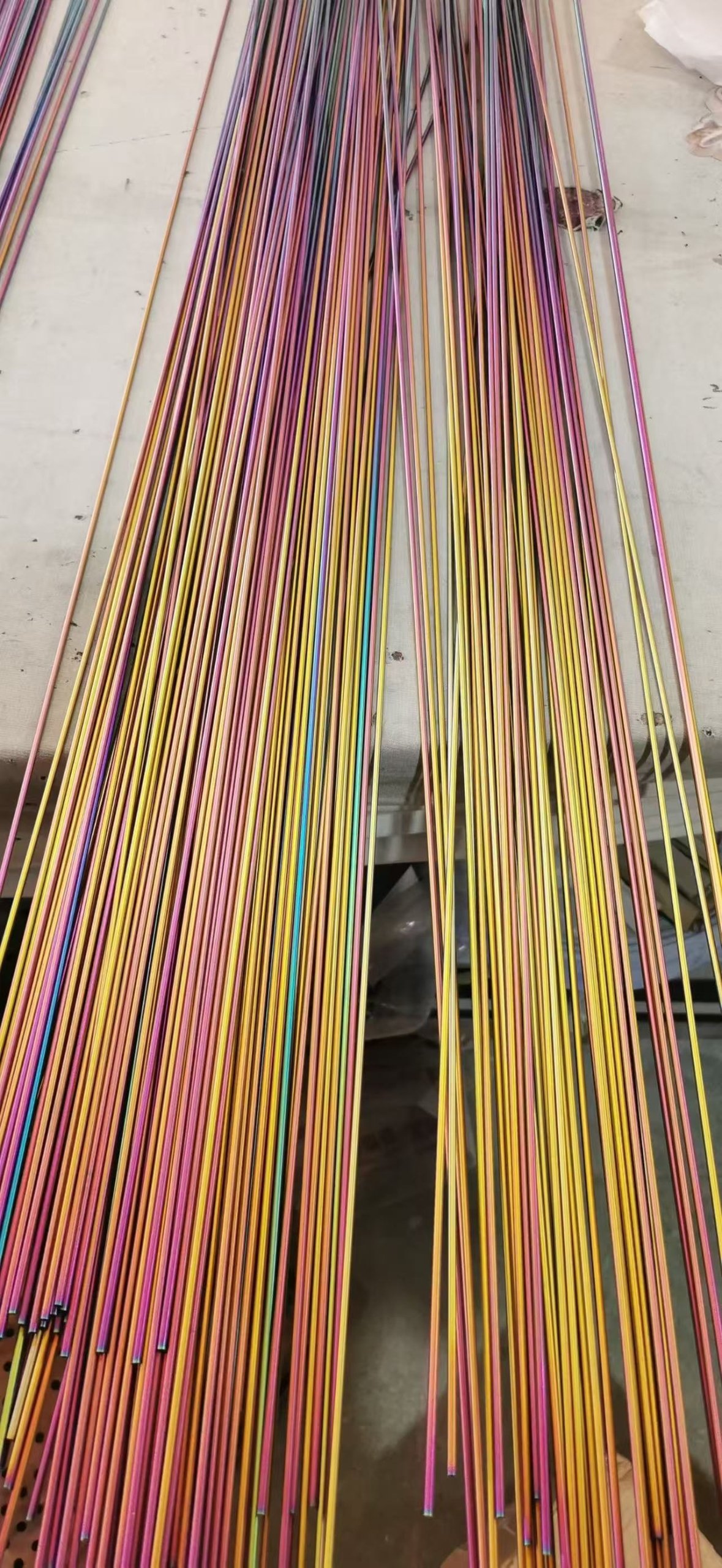
 Fábrica de tubos de acero inoxidable de Foshan Xinliheng

What would metal look like if it shed its monotonous silver-gray?
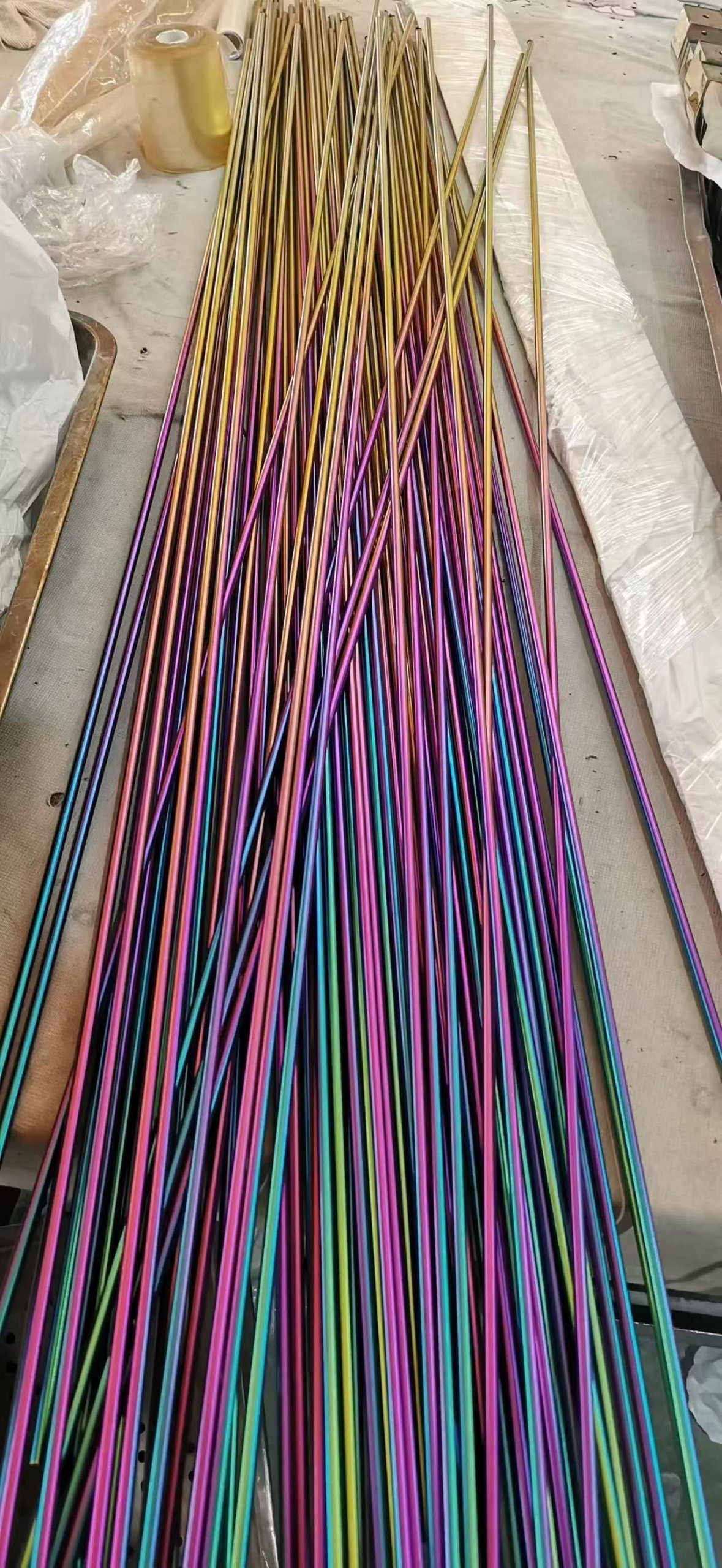
The row of rainbow-like hanging tubes in the workshop is a new thing that has recently fascinated me—colored stainless steel capillary tubes. A gradient from deep purple to bright yellow wraps around the hairline-thin tube walls; they feel cold and hard to the touch, yet visually resemble Monet’s palette kneaded into industrial parts.
It’s more than just “good-looking.”
Don’t be fooled by its flashy exterior—the “core” of these tubes is solid 304/316 stainless steel. Corrosion resistance and high-temperature resistance are fundamental; the 0.1mm wall thickness precision allows them to fit into the gaps of electronic components and withstand the sterilization processes of medical devices.
A client recently used them for jewelry supports: so thin they can fit through the hole of a pearl, and the colors complement the gemstones for a sophisticated look; electronics factories are also using them for micro-wiring harnesses, eliminating the need for additional painting, saving a step and preventing paint chipping.
Why “colored stainless steel”?
The color isn’t applied; it’s an oxide film formed on the metal surface through vacuum ion plating—only a few micrometers thick, yet resistant to friction and weak acids. The gradient sheen under sunlight is the effect of the film’s refraction, and the color transitions in each tube have subtle differences with a “handmade” feel.
A designer once said that using it for installation art, with the lights on, the entire space would feel like it was immersed in a rainbow. I jokingly called it “industrial-grade romance,” but he was serious: “Now clients even want ‘photographs’ of parts; this tube just stands there as a visual focal point.”
Who’s secretly using it?
Jewelry/Accessories: Replaces traditional metal wire, naturally lustrous without electroplating.
Electronics/Instruments: Micro-tubes + insulation, saving on encapsulation materials.
Art Installations: A “breakout” use of industrial materials, lower cost than art resin.
Medical Devices: Biocompatibility + easy cleaning; some consumables are starting to use it.
Last week, I posted a picture of the workshop on Instagram, and an overseas studio actually asked, “Can you customize gradient colors?”—It turns out that the “aesthetics” of industrial parts have long been a globally recognized advantage.
Finally: Don’t treat it as a “decorative vase.”
A few days ago, I helped a client test it. I soaked the tubes in salt water for a week, took them out, wiped them dry, and the color was still as bright as if it had just come out of the oven. This isn’t just a “pretty part”; it’s clearly aesthetics welded onto practicality.
Next time you see that unusual color in a machine, don’t be surprised—the romance of industry has long been hidden in these tiny tubes.